
Beyond the Label: Your Strategic Guide to Choosing a Private Label Skincare Manufacturer in 2026
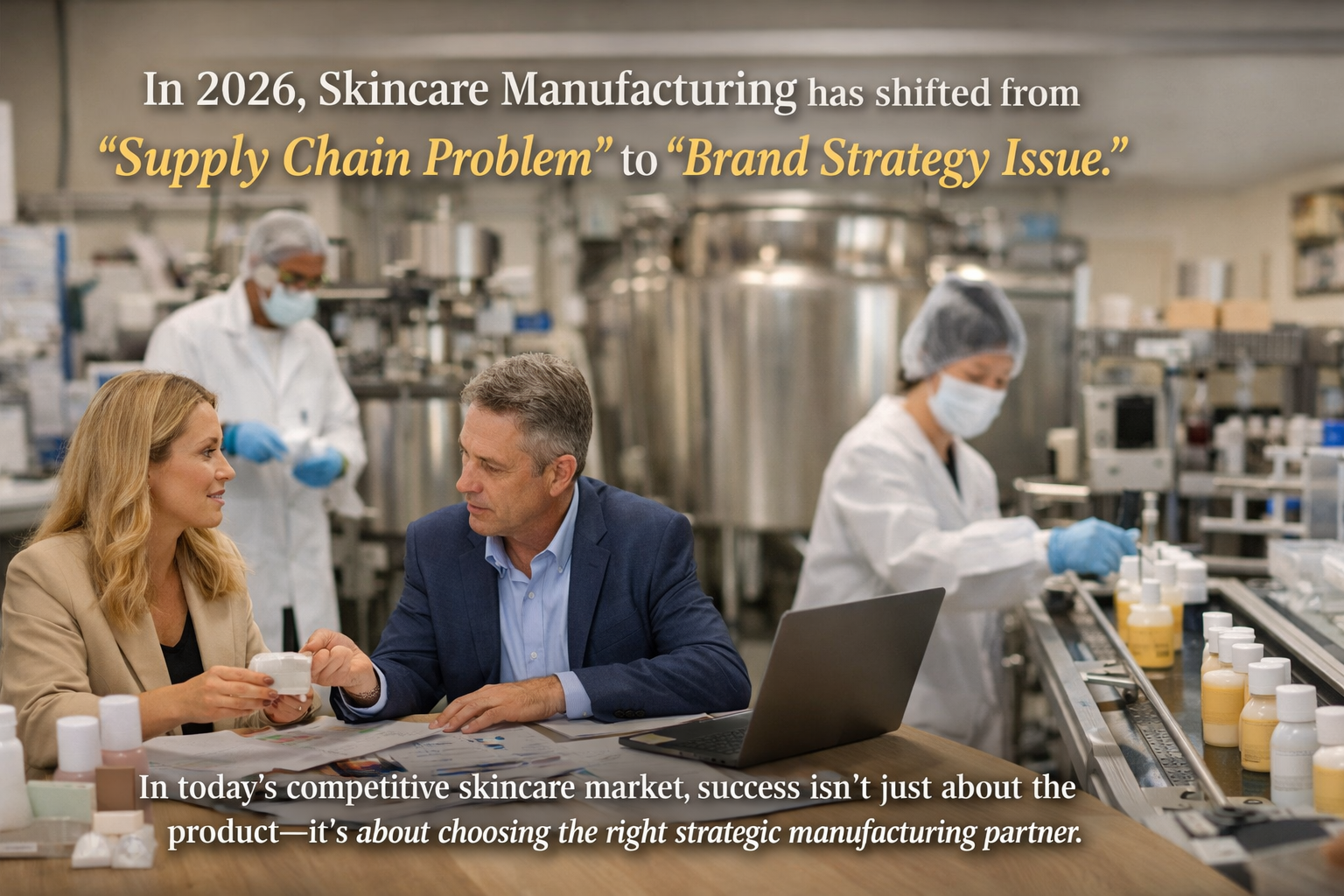
The glow of a new skincare line on a crowded Sephora shelf. The sleek, minimalist packaging of a direct-to-consumer serum arriving in a mailbox. The trusted name of a spa’s exclusive brand in a treatment room. What do they all have in common? Behind nearly every successful skincare brand you admire, there is an invisible giant: a private label skincare manufacturer.
In the beauty industry of 2026, the barrier to entry has never been lower, yet the stakes have never been higher. Anyone can slap a sticker on a bottle. But building a brand that resonates, retains customers, and turns a profit requires a partnership that goes far deeper than a purchase order. It requires finding a manufacturer who is not just a supplier, but a strategic ally in innovation, compliance, and quality.
This guide is not a superficial checklist. It is a deep dive into the complex ecosystem of private label manufacturing. We will move beyond the jargon of MOQs and ODM to explore the nuanced art of selecting a partner who can translate your vision into a reality that is safe, scalable, and sellable in the global market of 2026.
The 2026 Landscape of Private Label Skincare
The relationship between a brand and its manufacturer has evolved. It is no longer a transactional exchange of formulas for funds. In today’s climate, driven by educated consumers and rapid trend cycles, this partnership is the bedrock of brand credibility and agility. Understanding the current forces shaping the industry is the first step in making an informed choice.
Why "Clean" is No Longer a Trend, But a Baseline
Gone are the days when "paraben-free" was a bold differentiator. In 2026, it is a table stake. The modern consumer arrives at the product page armed with an ingredient decoder app and a deep skepticism of greenwashing. They are looking for verifiable transparency, not just marketing claims .
This shift has fundamentally altered the capabilities required of a top-tier private label skincare manufacturer. You need a partner who doesn’t just offer a "clean" formula but can provide the documentation to prove it. This means access to formulations that are not only free from a standard list of controversial ingredients but are also built on a foundation of ethical sourcing and environmental consciousness. Manufacturers are now responding with readily available vegan, cruelty-free, and sustainably sourced lines, integrating these principles into their core catalogs rather than treating them as niche add-ons . When evaluating a partner, you must look for one that views regulatory compliance not as a hurdle, but as a fundamental part of their service, offering full dossiers for EU CPNP, FDA registration, and other international standards .
The Speed-to-Market Imperative: From TikTok Trend to Shelf
Social media has compressed the lifespan of a beauty trend from years to weeks. A single viral video can spike demand for a specific active ingredient like a fermented peptide or a rare adaptogen overnight. In this environment, agility is everything. A brand's ability to capitalize on a trend depends entirely on the responsiveness of its private label skincare manufacturer .
This is where the depth of a manufacturer’s "library" becomes a competitive weapon. The best partners maintain a vast repository of pre-existing, proven base formulas. These are not generic creams; they are sophisticated platforms that can be rapidly customized with different active blends, textures, or natural fragrances. This approach collapses the traditional 6-to-12-month product development cycle down to a matter of weeks . You are not starting from scratch; you are starting from a position of strength, allowing you to pivot quickly and bring a product to market while the trend is still peaking. This requires a manufacturer with a robust R&D team that is not just formulating in a lab but is actively tracking global beauty trends.
Decoding the Manufacturer: Capabilities, Compliance, and Culture
Choosing a manufacturer is akin to a merger. You are joining your brand's future with their operational reality. Looking at a glossy brochure is not enough; you must understand the machinery, the mindset, and the metrics that define their day-to-day operations. This evaluation must be multi-layered, going far beyond the surface.
Technical Prowess and Specialization
Not all factories are created equal. Some excel at high-volume, simple emulsions, while others are veritable laboratories capable of complex cosmeceutical formulations. Your product concept will dictate which type you need. If you are developing a high-stability vitamin C serum or a time-release retinol treatment, you need a partner with proven technical proficiency in stabilizing sensitive actives and creating pH-optimized delivery systems that actually penetrate the skin .
You should probe into their in-house capabilities. Do they have a dedicated team of dermatological chemists? Can they conduct stability testing, microbial challenge tests, and preservative efficacy studies in-house? A manufacturer investing in state-of-the-art laboratories is a manufacturer committed to quality . This vertical integration of testing and R&D is a massive advantage; it reduces lead times and ensures that any issues are caught and corrected long before a batch is shipped to you . For brands looking to enter the cosmeceutical space, partnering with a facility that understands the science as well as the art of skincare is non-negotiable.
The Hidden Language of Operational Metrics
How do you separate a world-class partner from a mediocre vendor before you sign a contract? The answer lies in data. Savvy brand owners are now looking at quantifiable KPIs that predict reliability.
-
On-Time Delivery Rate: This is the most telling metric of operational health. A rate consistently at or above 95% suggests a factory with streamlined processes, reliable supply chains, and realistic production scheduling. A rate below 90% is a red flag for potential logistics instability .
-
Responsiveness: In a fast-moving industry, time is money. A manufacturer's average response time to inquiries is a proxy for their client-centric focus. Suppliers who consistently reply within 3-6 hours tend to have dedicated account management teams and internal workflows that can adapt quickly to your needs, preventing small issues from becoming major delays .
-
Reorder Rate: This is the ultimate vote of confidence from their existing clients. A high reorder rate (above 20-30%) indicates that brands are not just placing one-off orders but are building lasting, successful partnerships. It signals consistent satisfaction with quality, communication, and commercial viability .
Culture and Communication Style
This is the most subjective yet critical part of your evaluation. You are entering a long-term relationship that will face inevitable challenges—a delayed shipment, a formulation tweak, a packaging redesign. How your manufacturer communicates during these moments defines the partnership.
Do they view you as a partner or just a purchase order? During initial conversations, pay attention to how they handle your questions. Are they dismissive of your ideas, or do they offer consultative advice based on their experience? Do they listen to your brand vision and offer relevant suggestions, or do they push their own pre-made kits? The best manufacturers act as an extension of your team. They share your excitement and are as invested in your success as you are. This alignment in culture—a shared commitment to quality, innovation, and mutual growth—is the glue that holds the partnership together during the inevitable ups and downs of bringing a product to life .
From Concept to Contract: A Strategic Sourcing Roadmap
Knowing what to look for is one thing; knowing how to find it is another. The journey from a spark of an idea to a finished product on a pallet is a winding road. A strategic, phased approach to sourcing can save you months of headaches and thousands of dollars.
Phase 1: Discovery and Due Diligence
Your search will likely begin online, on platforms like Alibaba or Thomasnet, or through industry referrals. This initial phase is about casting a wide net and then quickly filtering it. Start by defining your product profile with extreme specificity. Don't just say "a moisturizer." Specify the desired texture (a light gel-cream vs. a rich balm), the key active ingredients (5% niacinamide, 0.3% retinaldehyde), the target skin type, and the claim you want to make (brightening, firming, calming) .
With this brief in hand, you can identify suppliers who specialize in your niche. Look for those who list relevant certifications prominently—ISO 22716 (GMP for cosmetics), FDA registration, and for higher-end claims, perhaps NSF or third-party organic certifications . A quick scan of their product catalog will tell you if their aesthetic and formulation philosophy aligns with yours. Shortlist 3-5 manufacturers who pass this initial compliance and capability check.
Phase 2: Validation Through Samples and Small Batches
This is where the rubber meets the road. A PDF spec sheet can look perfect, but the proof is in the product. Ordering samples is non-negotiable. Most manufacturers charge a nominal fee for samples, which is often credited back to you on your first bulk order . When you receive the samples, don't just look at them. Live with them. Test the texture, the scent, and the packaging durability. How does the pump feel? Does the label align perfectly? Does the cream separate after a week on your counter?
This phase should also include a small batch trial if your budget allows. Ordering a minimal production run—even just 50 to 100 units—is a low-risk way to test the entire system . You will learn about their logistics, their lead times, and their consistency at a scale that matters. You might also consider using a third-party inspection service during this trial to verify quality control measures, ensuring that what was promised in the sample is replicated in the batch .
Phase 3: Negotiation and Legal Safeguards
Once you have validated the quality and reliability, it is time to formalize the partnership. Negotiation is not just about price per unit; it is about the total cost of the relationship. Be clear about payment terms. Using escrow services or platform-based payment protection releases funds only after you have verified the shipment, minimizing financial exposure .
This is also the time to discuss and document policies for quality failure. A reputable private label skincare manufacturer will have a clear policy for handling defective batches, often absorbing the cost and reformulating at no extra charge . Ensure this is in your contract. Discuss lead times, intellectual property protection for your custom formulas, and the process for future reorders. A clear, fair contract protects both parties and sets the stage for a transparent and trusting long-term relationship.
The Art and Science of Formulation & Packaging
A product is the sum of its parts, and in skincare, those parts are the formula inside and the vessel that holds it. This is where your brand's soul is translated into a physical object. The choices you make here, guided by your manufacturer, will define your customer's experience.
Navigating Customization: From Catalog to Custom
One of the first decisions you will make is the level of customization you need. This is often described in two ways:
-
Private Label: You select a product from the manufacturer's existing catalog. It is a proven formula that is ready to go. You choose the packaging, design the label, and it becomes yours. This is the fastest and most cost-effective route to market, ideal for testing a concept or building a baseline range .
-
OEM/ODM (Custom Manufacturing): This is true creation. You bring a concept, or the manufacturer helps you develop one, and they formulate a unique product from scratch. You can specify every ingredient, the texture, the fragrance, and the desired claims. This path requires more time and investment but results in a truly proprietary product that cannot be replicated by another brand .
Many manufacturers offer a hybrid approach, allowing you to take a "base formula" from their library and modify it—boosting the percentage of an active, swapping a botanical extract, or adjusting the pH. This "semi-custom" path offers a fantastic balance of speed and differentiation .
Sustainability as a Unifying Principle
In 2026, sustainability is not an add-on; it is a design philosophy that must encompass both formula and packaging. Consumers are sophisticated enough to spot the difference between genuine effort and performative marketing. This is pushing manufacturers to innovate on multiple fronts.
For the formula, it means sourcing ingredients with verifiable supply chains, using water-efficient farming practices, and exploring "waterless" formats like solid bars and concentrated powders that reduce shipping weight and water usage . For packaging, it means moving beyond simple recyclability. We are seeing a rise in refillable systems, where a durable outer package (like a glass jar or a metal case) is kept and a refill is purchased in minimal, lightweight packaging. It also means a shift towards mono-materials—using a single type of plastic for a tube and cap—which is far easier to recycle than complex, multi-material laminates . A forward-thinking manufacturer will offer you a menu of sustainable options and help you navigate the trade-offs to find the solution that best aligns with your brand's values and your customer's expectations.
Conclusion: Building a Partnership for Growth
The search for the perfect private label skincare manufacturer is ultimately a search for a partner. It is a relationship built on a foundation of shared goals: to create a product that is safe, effective, beautiful, and profitable. The manufacturers who stand out in 2026 are those who offer more than just production lines. They offer expertise, agility, and a genuine commitment to your success.
They are the ones who will guide you through the complex regulatory landscape, help you pivot when a new trend emerges, and troubleshoot a packaging issue before it becomes a customer complaint. They are an extension of your team, working quietly behind the scenes to ensure that when your customer finally uncaps that bottle, the experience is everything you dreamed it would be.
The journey from concept to shelf is long, but with the right partner, it is one of the most rewarding adventures in business. Do your due diligence, ask the hard questions, and trust your instincts. The perfect partner is out there, ready to help you bring your vision to light.
Ready to start your journey? Contact our team of experts today for a personalized consultation. We'll help you navigate the landscape of private label manufacturing and connect you with vetted partners who match your brand's unique vision and values.
Related_News
-

Sing Foo Participated in the 2025 Shanghai Beauty Expo
-
New GMP-Certified Production Line Officially Launched
-
New Product Series for Global Market
-
Skincare Manufacturer: How SINGFOO Masters the Art of Cosmetic Innovation
-
Cosmetic Manufacturer: SINGFOO – Where Vision Meets Precision in Beauty Manufacturing


SUBSCRIBE
IF YOU REQUIRE THE MOST SUITABLE PRODUCTS, FEEL FREE TO CONTACT US.
INQUIRY